

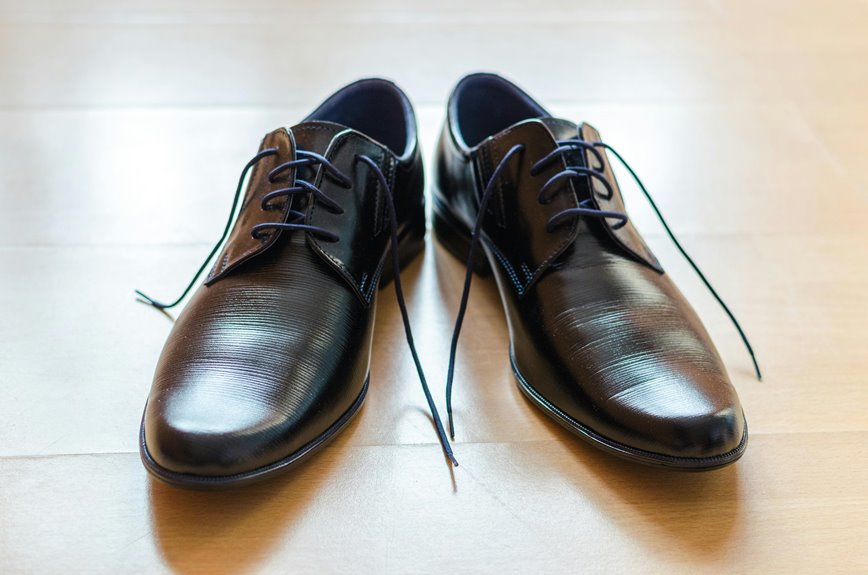

To remove creases from leather shoes, use gentle heat, light moisture, and the shoe’s natural shape. Start with simple tools and work slowly to soften the leather. Then smooth the crease with care so the finish stays safe. Done right, your shoes can look better and last longer.
Why Leather Shoes Crease
Leather shoes crease because the leather fibers flex and deteriorate each time you walk, especially across the toe box where your foot bends most. You can’t stop that natural stress, because every step pushes the material through repeated foot movement.
Good leather flexibility helps the shoe move with you, but it also means the surface will shift and fold where pressure concentrates. Should the fit’s loose, the leather bends even more, and creases deepen faster.
Even high-quality pairs show lines over time; that’s normal, not a flaw. Consider creasing as part of wearing in a real leather shoe. Your goal isn’t perfection, but keeping the leather looking clean, supported, and well cared for as it ages.
What You Need to Remove Shoe Creases
To remove shoe creases effectively, you’ll want a few basic tools on hand: shoe trees or stuffing material to hold the shape, a low-heat source like a blow dryer or iron, a damp cotton cloth in case you’re using steam, and a leather conditioner or balm for finishing.
Choose suitable materials that support leather, not damage it, and keep your setup simple. These effective techniques work best whenever you control heat carefully and prep the shoe before beginning.
Keep a clean towel nearby, too, so you can handle the leather safely and wipe away residue. In case you’re working with polished dress shoes, gather matching polish as well.
Having everything ready helps you move confidently, protect the finish, and get results that look right in the group.
Use a Shoe Tree to Smooth Creases
Insert a shoe tree as soon as you take the shoes off so the leather holds its shape while it cools and dries. You’ll see the shoe tree benefits right away: it fills the vamp, eases light creases, and supports maintaining shape between wears.
Use a wooden pair for the best fit and gentle stretch.
- Slip them in right after wear.
- Choose the correct size for full contact.
- Let the shoes rest overnight.
- Use them consistently to stop creases settling in the same lines.
This simple habit helps your shoes look cared for, and it signals you’re part of the group that knows maintenance matters.
Do it every time, and you’ll keep the leather smoother, longer.
Remove Creases With Gentle Heat
A little gentle heat can relax light to moderate creases and make the leather easier to smooth with hand.
For this crease treatment, use controlled heat application from a blow dryer on low or medium, keeping it 6 to 8 inches away. Move it in small circles so one spot doesn’t overheat.
As the leather warms and softens, you can massage the crease with your fingers and encourage the surface to settle.
Keep the shoe supported with a tree or stuffing so it holds its shape while cooling.
This method works best on everyday creasing, not deep damage.
You’re not alone in wanting cleaner lines; steady, gentle heat helps you restore a sharper look without making the leather fight back.
How to Remove Creases Safely
Should you want to remove shoe creases safely, start with the least aggressive fix and work up only as needed. You’re part of the group that respects leather through testing methods on a small area initially, especially across different leather types.
Begin with shoe trees, then try gentle heat only on mild folds. Use these steps:
- Insert shoe trees right after wear to keep shape.
- Apply low heat from a safe distance, never rushing.
- Massage the crease while the leather stays warm and pliable.
- Match your method to the leather types you own.
Safety means avoiding direct flame, high heat, and heavy moisture.
Focus on crease prevention too: a proper fit, regular shoe tree use, and steady wear habits reduce new folds. Leather won’t stay perfect, but careful treatment keeps your shoes looking sharp.
Condition Leather After Crease Removal
After you remove the creases, apply a quality leather conditioner right away to restore lost moisture.
This helps keep the leather supple, supports the shoe’s shape, and reduces the chance of new cracks forming.
Use a thin, even layer and let it absorb fully before you wear the shoes again.
Apply Leather Conditioner
Once you’ve eased out the worst creases, apply a quality leather conditioner or balm to restore moisture and keep the leather supple.
Use a soft cloth, work it in evenly, and let your leather care routine support the shoe’s natural flex. These conditioning techniques help the fibers relax after heat or pressure, so the surface looks smoother and feels more resilient.
- Test a small concealed spot initially.
- Use a thin, even layer.
- Massage along crease lines, not against them.
- Wipe away excess before it sets.
Choose products made for your leather type, and you’ll keep your shoes looking like they belong in your rotation.
Finish with gentle buffing, then let them rest so the conditioner can settle cleanly.
Restore Moisture Balance
Even a well-smoothed leather shoe needs its moisture restored, since heat, steam, and handling can leave the fibers dry and less flexible. You should rebalance leather hydration right away so the material stays supple and keeps its new shape. Apply a thin layer of conditioner, let it absorb, then buff gently for moisture retention and a clean finish. Keep the pair away from direct heat while it rests.
| Step | Action |
|---|---|
| 1 | Clean the surface |
| 2 | Apply conditioner |
| 3 | Let it absorb |
| 4 | Buff lightly |
| 5 | Insert shoe trees |
This quick routine helps you belong to the group that maintains shoes, not just wears them.
Prevent Leather Shoes From Creasing
A proper fit is your primary defense against leather shoe creasing, because shoes that are too loose bend and fold in the wrong places.
You should also use shoe trees right after each wear so they hold the shape while the leather cools and dries. Consistent use helps you cut down on repeated crease lines and keeps the leather looking cleaner longer.
Proper Fit Matters
- Check heel hold: your heel shouldn’t lift.
- Confirm toe room: you need comfort, not extra length.
- Match width: tight sides create stress lines.
- Walk before buying: motion reveals weak fit fast.
You’ll protect the vamp, reduce pressure points, and keep your shoes looking sharp longer.
A clean fit also helps you feel like you belong in the room, because your shoes move with you, not against you.
Should a pair already feel sloppy, don’t expect it to age gracefully. Choose the size that supports your shape, and you’ll crease less from the start.
Use Shoe Trees
Once you take your shoes off, slip in shoe trees right away to help the leather hold its shape as it cools and dries. That simple habit delivers clear shoe tree benefits: it limits light creases, supports the vamp, and helps your pair look sharp longer.
Wooden shoe trees work best because they absorb moisture and gently stretch the leather, but other shoe tree types can help as long as they fit snugly. Use them every time, not just after deep cleaning or conditioning. You’ll also stop the leather from folding in the same spots, which slows wear and keeps your shoes in the rotation longer.
Should you want to look like you know the craft, this is one of the easiest moves you can make.
When to Take Shoes to a Cobbler
Should the crease be deep, set in, or paired with cracking, it’s time to take your shoes to a cobbler. You can handle light marks at home, but a pro can judge whether the leather needs stretching, refinishing, or panel work. Cobbler services and shoe repair help preserve the pair you’ve already broken in and keep it fitting your life.
- Should heat haven’t softened the crease, don’t push harder.
- In case the leather feels dry or splits, ask for conditioning.
- When the sole shifts or the shape collapses, get expert support.
- Should you want lasting results, let a cobbler restore the finish.
You’ll stay in step with others who value well-kept shoes and smart care.
Frequently Asked Questions
Can Suede Shoes Be Treated the Same Way as Smooth Leather?
No, suede should not be treated like smooth leather. Use suede-specific care instead, such as a suede brush, protector spray, and light steaming only. Heat, conditioners, and polishing can damage suede’s nap.
How Often Should I Condition Leather Shoes After Crease Removal?
Condition them immediately after crease removal, then repeat every 2 to 4 weeks if you wear them regularly. Leather dries out over time, so the timing should also reflect your climate and how often the shoes are used.
Will Crease Removal Methods Change My Shoe Size or Fit?
Usually, no. Crease removal will not noticeably change how your shoes fit, although heat or stuffing can slightly stretch leather. Pay attention to fit, use gentle methods, and follow crease prevention steps to avoid loosening the shoes.
Can I Use a Hairdryer Instead of a Blow Dryer?
Yes, you can use a hairdryer if it has a low heat setting. Hold it 6 to 8 inches away, warm the leather lightly, then massage it. Use leather care products and shoe trees for better results and less risk.
How Long Do Temporary Crease-Smoothing Results Usually Last?
Typically, crease smoothing holds up for a few wears to about two weeks, depending on how often you use the shoes. Results last longer with temporary methods such as shoe trees and regular crease prevention habits, especially after each wear and while the shoes are drying.
