

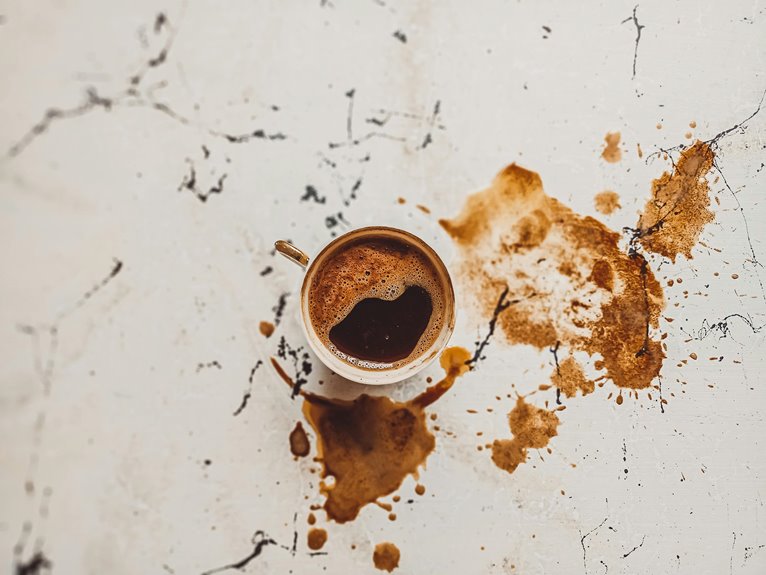

Coffee stains on upholstery are easiest to tackle right away. Grab a clean cloth, mild dish soap, white vinegar, warm water, and baking soda. Test your cleaner on a hidden spot before treating the stain. Then blot, clean, and lift any dried residue with the right method.
What You Need To Remove Coffee Stains
To remove coffee stains effectively, you’ll need a few basic supplies: a clean dry towel or cloth for immediate blotting, cold and warm water, white vinegar, liquid dish soap, baking soda, a clean cloth or microfiber cloth, and an old toothbrush for paste application.
Keep these cleaning supplies together so you can act fast on fresh spills and limit penetration into upholstery types. Use the dry towel initially, then rely on cloths that won’t shed fibers.
Mix the vinegar and dish soap solution in a small container, and prepare a baking soda paste in case you’re facing a set-in mark.
Should you work on your own upholstery, having the right tools nearby helps you stay confident and in control. Check your fabric care tag, then gather everything before you start cleaning.
Test The Cleaner On A Hidden Spot First
Before you apply any cleaner to the stain, test it on a discreet spot initially. Choose an area under a cushion, along a rear seam, or behind a skirt so your concealed testing won’t affect the visible finish.
Apply a small amount of the cleaner with a white cloth, then wait several minutes and check for color transfer, spotting, or texture change. This quick fabric compatibility check helps you confirm the upholstery can handle the solution you’ve chosen.
Should you see fading, stiffness, or residue, stop and select a milder option. Once the test area stays unchanged, you can move forward with greater confidence.
Careful testing keeps your routine controlled, protects the material, and helps you feel part of a group that cleans wisely.
Blot Fresh Coffee Stains Without Rubbing
For a fresh coffee spill, you should blot immediately with a clean, dry cloth to absorb excess moisture.
Don’t rub, since rubbing can spread the stain and damage fibers.
Use clean sections of the cloth as you blot until no more liquid transfers.
Blot, Don’t Rub
Use a clean, dry towel or cloth to blot the fresh coffee spill immediately, pressing lightly so you lift the liquid without spreading it. This simple habit protects fibers and keeps the stain from setting deeper.
You’ll get better results whenever you use controlled blotting techniques: press, lift, and move to a dry area of the cloth as soon as it picks up moisture. Don’t scrub, since rubbing can push coffee into the weave and distort the surface.
Pay attention to fabric considerations, because delicate upholstery needs gentler pressure than tightly woven material. Stay patient and methodical so you’re working with the fabric, not against it.
Acting fast helps you stay in control and gives your upholstery the best chance to recover cleanly.
Use Clean Cloths
Keep a clean, dry cloth or towel within reach so you can switch to a fresh section as soon as the initial one picks up coffee. You’ll protect upholstery best whenever you use clean cloths for each pass, because reusing a saturated area can redeposit stain.
Choose absorbent cloth types like microfiber, cotton, or lint-free towels; each supports precise cleaning techniques without snagging fibers. Press the cloth lightly onto the spill, then lift straight up and move to a dry section. This controlled contact helps you fit in with careful, fabric-safe care routines.
Keep rotating to unused areas until the cloth stops transferring color. Should you stay organized and methodical, you’ll remove fresh coffee more efficiently and reduce the chance of spreading the mark.
Absorb Excess Moisture
Once you’ve got a clean cloth ready, press it lightly onto the coffee spill to pull up as much liquid as possible. You’re not scrubbing; you’re giving the fabric a chance to absorb moisture before it travels deeper. Use firm, brief contacts, then lift and move to a dry section. This helps prevent stains from spreading and keeps the pile intact.
- Blot from the outer edge inward.
- Replace damp cloth areas often.
- Keep pressure steady, not hard.
- Stop once the cloth stays nearly clean.
If the spill’s still fresh, repeat the cycle quickly. You’ll protect the upholstery, control the spread, and set yourself up for the next cleaning step without damaging the fibers or backing.
How To Clean Fresh Coffee Stains
Act fast as soon as a coffee spill is fresh, because the sooner you treat it, the less likely it’s to set into the fibers.
Blot the area with a clean, dry cloth; don’t rub, since friction can push the liquid deeper and spread the mark. Work from the outside in, switching to fresh sections of the cloth until little moisture transfers.
Should a trace remain, dampen a cloth with a mild solution of dish soap, white vinegar, and warm water, then blot again and follow with a clean water rinse.
Finish by blotting dry and letting the spot air-dry. This quick routine supports coffee stain prevention and good upholstery care, so you can protect your fabric and keep your space looking cared for.
How To Treat Dried Coffee Stains
When a coffee stain has dried, you’ll usually need a stronger cleaning approach to break up the residue before it sets deeper into the fibers.
Start with careful dried stain removal, then support your upholstery care with a verified spot-cleaning method.
- Blot the area with a damp cloth to loosen surface buildup.
- Apply a mix of 1 tablespoon dish soap, 1 tablespoon white vinegar, and 2 cups warm water.
- For stubborn marks, spread a baking soda paste, then brush lightly with a soft toothbrush.
- Rinse with cold water and repeat only when the fabric’s care tag allows.
Work from the stain’s edge inward, and try every solution in a concealed spot initially so you stay confident and protect your upholstery.
Dry The Upholstery And Restore Texture
After cleaning, you’ll need to dry the upholstery completely to prevent moisture marks, odor, and fiber distortion. Use drying techniques that move air across the fabric, not heat that can set residue or warp backing. Blot again with a dry microfiber towel, then point a fan at the cleaned zone and keep windows open when humidity is low. For texture restoration, lift nap gently with a soft upholstery brush once the surface feels barely damp.
| Step | Tool | Result |
|---|---|---|
| Blot | Microfiber towel | Removes surface water |
| Airflow | Fan | Speeds evaporation |
| Groom | Soft brush | Realigns fibers |
| Inspect | Hand test | Confirms dryness |
| Finish | Vacuum lightly | Restores even pile |
Check seams and cushions before use, and repeat airflow should you notice coolness or dampness.
Frequently Asked Questions
Can I Use Club Soda on Coffee Stains?
Yes, club soda can help with coffee stains, especially when the spill is fresh. Blot the area first, then test it on a hidden spot before using it on upholstery.
How Do I Remove Coffee Smell From Upholstery?
Blot the spill with a clean cloth, then mist a mix of one part white vinegar to two parts water over the fabric. Sprinkle baking soda across the area, leave it overnight, vacuum it up the next day, and use a fan to dry the upholstery.
Will Coffee Stains Come Back After Cleaning?
Yes, they can return if hidden residue or moisture remains. To stop the stain from reappearing, repeat the cleaning steps, dry the area completely, and follow the upholstery care instructions for your fabric.
Can I Clean Suede Upholstery the Same Way?
No, suede needs a different method. Blot spills right away, keep water use very low, and use a suede-safe cleaner or a professional service to preserve the texture and color.
What Should I Do if the Fabric Fades?
If the fabric begins to fade, stop cleaning and check a hidden area first. Fading signals that color loss is already happening, so protecting the dye should come first. Before using stronger cleaners again, consult a fabric care professional about restoration options.
