

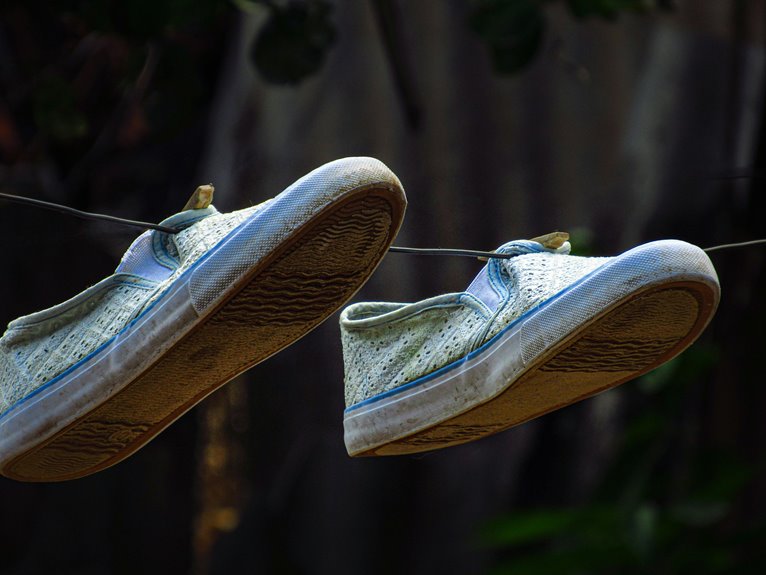

Smelly running shoes usually come from sweat, bacteria, and shoes that do not dry fully. The odor can be removed with the right cleaning and drying routine. Some fixes work better on certain shoe materials than others. A few simple habits can also keep the smell from coming back.
Why Running Shoes Smell
Running shoes smell because sweat, heat, and limited airflow create ideal conditions for bacteria to decompose moisture trapped in the insoles and linings.
You get sweat buildup as your feet work hard, and that trapped moisture retention drives bacteria growth fast. Your fabric choice matters too; synthetic uppers and dense foams can hold odor longer than open mesh.
Good foot hygiene lowers the microbial load before it spreads into the shoe, and moisture-wicking sock material helps move sweat away from your skin.
Poor shoe storage in a closed bag or damp closet keeps the problem active between runs.
For odor prevention, you need to control moisture, clean your feet and socks, and choose breathable materials that let your gear reset so you can keep showing up with confidence.
Air Out Running Shoes the Right Way
Once you’ve cut down sweat and bacteria during the run, the next step is to let your shoes dry completely so odor doesn’t keep building. You should use shoe ventilation techniques that move air through the toe box and collar, not just around the outside.
Good drying methods help your pair stay ready for the next run and keep you in the crew of consistent runners.
- Loosen the laces and pull the tongues up so air reaches damp linings.
- Set shoes in a dry, shaded spot with steady airflow; a fan works well.
- Rotate pairs and wait 24 hours before wearing the same pair again.
If the insoles stay damp, remove them and let them air out separately.
Wash Running Shoes Safely
Should your shoes still smell after drying, you can wash them carefully to remove sweat, bacteria, and trapped grime without damaging the materials.
Check shoe materials initially: mesh, knit, and synthetic uppers handle gentler washing techniques than leather or bonded foam.
Remove laces and insoles, then brush off loose debris so odor sources don’t redeposit.
Use cool water, mild detergent, and a soft brush or cloth; scrub the interior and outsole lightly, never soak glued seams.
Rinse with minimal water, then press out excess moisture with a towel.
For drying methods, stuff them with paper, reshape them, and air-dry away from direct heat.
Finish with maintenance tips and storage solutions: rotate pairs, keep them dry, and store them in a ventilated space to limit future buildup.
Use Baking Soda on Running Shoes
Sprinkle 2 to 3 tablespoons of baking soda evenly inside each running shoe.
Shake the shoes gently so the powder reaches the insoles and linings, then let them sit overnight.
In the morning, shake out the residue and wipe the interior with a dry cloth.
Sprinkle Baking Soda
Baking soda is one of the most effective ways to neutralize odor in running shoes because it helps absorb moisture, neutralize acidic odor compounds, and inhibit bacterial growth.
You can use these baking soda benefits to keep your gear feeling fresh and ready for the next run. Sprinkle 2–3 tablespoons evenly inside each shoe, then shake the pair gently so the powder reaches the insoles and linings.
This simple step fits into practical deodorizing techniques for runners who want to stay part of a clean, confident routine.
- Measure the powder accurately.
- Distribute it across high-sweat zones.
- Brush out any excess before you wear them again.
This method works best whenever you’re consistent and want a low-cost fix.
Leave Overnight
Let the baking soda sit in your running shoes overnight so it has enough time to absorb moisture, neutralize odor compounds, and suppress bacterial growth.
You’ll get the best result when you leave the shoes in a dry, open area, not a closed bag or damp locker. This step works because baking soda keeps working while you’re off your feet, supporting moisture control inside the insoles and lining.
In the morning, shake out the powder and wipe any residue with a dry cloth. Should your pair still smell, repeat the cycle after your next run.
For consistent shoe storage, keep a small container of baking soda nearby so you can treat shoes as soon as they cool. That routine helps your gear stay fresh and ready.
Try Vinegar or Rubbing Alcohol
Should baking soda or drying methods aren’t enough, try a vinegar or rubbing alcohol treatment to reduce odor-causing bacteria. You can use the vinegar benefits of white vinegar’s acidity to disrupt microbes and neutralize lingering smell.
Mix equal parts vinegar and water, then mist the insoles and fabric lightly; don’t soak the shoe. Should you prefer rubbing alcohol, it evaporates fast and helps sanitize high-contact areas. Apply it with a cloth or spray bottle, then let airflow do the work.
- Test a small concealed spot initially.
- Target insoles, tongue, and lining.
- Let shoes dry fully before your next run.
This method fits runners who want a reliable reset and a cleaner-feeling pair without harsh residue.
Freeze Running Shoes to Fight Odor
You can freeze running shoes overnight to slow odor through suppressing smell-causing bacteria.
Place each shoe in a sealed bag initially so moisture doesn’t condense inside the freezer.
After 8 to 12 hours, remove them and let them warm and dry fully before you wear them again.
Freeze Smell-Causing Bacteria
Freezing running shoes can slow odor buildup through reducing bacterial activity, which helps limit the smell that lingers after a workout. For effective freezing techniques, seal each shoe in a clean bag, then place it in the freezer for several hours; this supports bacteria reduction without soaking the materials.
You’ll get better odor prevention when you let the shoes thaw fully before your next run, then air them out and inspect the insoles.
- Remove loose dirt initially for cleaner shoe maintenance.
- Freeze dry shoes only, not wet pairs.
- Pair this step with regular rotation to keep your running community-ready.
This method won’t replace deep cleaning, but it can help you manage odor between washes and stay confident in your gear.
Bag Shoes Overnight
One simple overnight fix is to bag your running shoes before freezing them: seal each dry shoe in a clean plastic bag, then place them in the freezer for several hours to slow bacterial activity and help suppress odor.
This works best after you’ve removed insoles and let the shoes air out initially. Bagging limits freezer moisture, protects your food, and keeps your shoe storage organized.
Once you’re ready, take the shoes out, unwrap them, and let them warm at room temperature before wearing. Use this method as part of odor prevention, not as a replacement for drying, rotation, or washing.
In case your shoes still smell strong, repeat the freeze cycle after a run and pair it with moisture control for better results.
Replace Running Shoe Insoles and Socks
Should odor keep returning after cleaning, replace the insoles and upgrade your socks. Old foam traps sweat, salt, and bacteria, so insole replacement can reset the odor load fast.
Choose removable, washable insoles or fresh performance inserts that dry quickly and fit snugly. Then tighten your sock hygiene: wear moisture-wicking pairs that move sweat away from your skin and reduce residue inside the shoe.
- Pull out worn insoles and compare odor, compression, and shape loss.
- Install new insoles with the same arch and length profile.
- Swap to synthetic or merino socks and change them after each run.
You’ll notice cleaner contact points, less moisture retention, and a more confident fit. As your gear works with you, you stay part of the pack.
Keep Running Shoes From Smelling Again
Keeping your shoes fresh after a cleanup means cutting off moisture before bacteria can rebound. Build daily maintenance around moisture control: remove insoles, loosen laces, and let both dry completely after each run.
Use shoe storage that breathes, not sealed bins; open shelving with ventilation tips helps odor prevention.
Keep to steady cleaning routines: wipe linings, refresh with baking soda pouches, and rotate pairs so each gets 24 hours off.
Choose fabric choices that wick sweat, and wear moisture-wicking socks to reduce buildup.
Good foot hygiene matters too—wash feet, dry between toes, and change socks right after workouts.
Should you stay consistent, your gear stays ready for the next run, and you’ll feel part of a crew that treats fresh shoes like standard kit.
Frequently Asked Questions
How Long Do Tea Bags Need to Deodorize Shoes?
Tea bags usually need about 24 hours inside shoes to reduce odor. Place dry, used tea bags in breathable fabric, then let the shoes air out so the smell does not come back.
Can Activated Charcoal Help Remove Running Shoe Odors?
Yes, activated charcoal can reduce odors in running shoes. It draws in moisture and odor molecules. Put charcoal shoe bags in each shoe for 48 hours, then let the shoes air out.
Do Shoe Deodorizers Work Better Than Home Remedies?
Yes, shoe deodorizers often work faster. About 70% of shoe odor comes from trapped moisture and bacteria, so commercial sprays usually absorb smells more quickly, while natural options like baking soda need more time to work.
Is It Safe to Use Silica Gel Packets in Shoes?
Yes, silica gel packets can be used safely in shoes if you leave the packets sealed and dry. They absorb moisture well. Do not open them, and replace them once they are saturated to keep them effective.
How Often Should I Rotate Running Shoes to Prevent Smell?
Switch between two pairs of running shoes on alternating runs, or leave a full day between wears. This lets each pair dry out for about 24 hours, which helps limit moisture and odor causing bacteria.
