

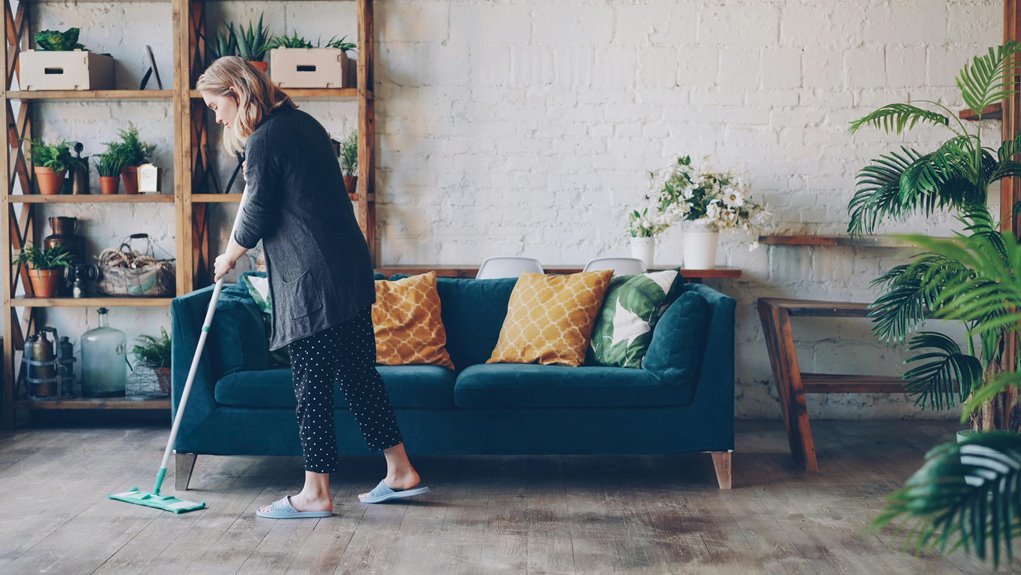

Should your laminate floors could talk, they’d probably beg you to stop soaking them and start treating them like the neat, picky surface they are. You can keep them looking fresh via sweeping or vacuuming initially, then mopping with a barely damp microfiber cloth and a pH-balanced cleaner. After that, you’ll want to handle stains fast and avoid the sneaky mistakes that cause streaks, swelling, and dull spots.
How to Clean Laminate Floors Safely
Keeping laminate floors safe starts with gentle, steady care.
You can sweep or dry-mop each day to lift grit, dust, and pet hair before they scratch.
For spills, act fast with a barely damp microfiber cloth, then dry the spot right away.
Whenever you clean more deeply, choose child safe products or a mild laminate cleaner, since harsh liquids can leave haze and stress the surface.
This routine also supports allergy prevention through reducing the fine dust that settles into corners.
Use just enough water to make the mop damp, not wet, and move in smooth lines.
Should you stay consistent, your floors will look calm, clean, and cared for, and your home will feel more welcoming.
Best Tools for Cleaning Laminate Floors
A good toolkit can make laminate care feel easy instead of fussy, and that matters whenever you want clean floors without the worry. You’ll do best with a microfiber mop, a soft-bristle broom, and a vacuum with a hard-floor setting. These tools lift grit gently, so your floor stays smooth and bright.
| Tool | Why it helps |
|---|---|
| Microfiber mop | Cleans with little water |
| Soft-bristle broom | Reaches corners gently |
| Hard-floor vacuum | Lifts dust without scratches |
| Dry cloths | Buffs away moisture fast |
| Eco friendly tools | Support safer home care |
Choose ergonomic handles too, because your wrists deserve comfort during cleanup. Whenever you pick tools that feel good in your hands, you’ll keep the routine easy, quick, and calm.
How to Sweep and Vacuum Laminate Floors
Usually, the best way to protect laminate floors starts with a calm sweep or vacuum.
You can keep your space feeling fresh through using a soft-bristle broom or a vacuum on hard floor mode with a brush attachment. Move slowly so grit lifts instead of skids, especially near corners and edges.
For edge dusting, guide the broom along baseboards and under trim where crumbs hide.
In the event that you share your home with pets, pet grooming helps too, because less loose hair means less work later.
Empty the vacuum bin whenever it’s partly full so suction stays strong.
Then you’ll clear daily dust without scratching the surface.
A few quiet minutes each day can make your room feel cared for, welcoming, and easy to enjoy.
How to Mop Laminate Floors Without Damage
Mop laminate floors gently, and you’ll protect that smooth finish while still getting a truly clean surface. Start with sweeping initially, then use a damp microfiber mop, not a soaked one. Your microfiber technique should move in straight lines, and you’ll pick up light grime without pushing water into seams.
Mix a small amount of pH-balanced cleaner with warm water, then wring the mop well. After that, dry each section with a soft cloth so your floor stays safe and streak-free.
Keep an eye on mop frequency, too. For most homes, mopping monthly works well, whereas busy spaces might need it a little sooner. Provided you stay consistent, your floor will feel cared for, and you’ll keep that warm, welcoming look everyone loves.
How to Remove Stains From Laminate Floors
Stains on laminate floors look worse than they usually are, but you can handle them provided you initially identify what made the mark. Once you know the stain type, you can use a gentle cleaner that lifts it without harming the finish.
Then you can take a few simple steps to keep new marks from showing up again.
Identify Stain Type
Before you reach for a cleaner, take a close look at the mark so you can match the right fix to the right mess. You’re not guessing here; you’re reading the stain origin like a clue in your own home.
Check color analysis first. A dark brown spot may point to mud or food, while a gray smear often comes from shoe marks. Bright red or purple stains usually come from drinks, and greasy shine can signal oil or lotion.
If the mark feels sticky, soft, or powdery, that helps too. When you identify it promptly, you save time and protect your floor from extra wear.
Your space stays calmer, and you can move to the next step with confidence, not frustration.
Use Gentle Cleaners
Now that you’ve spotted what kind of mark you’re coping with, choose a gentle cleaner that can lift it without stressing the laminate. You’re not alone provided that you feel unsure here; a soft touch usually wins.
Mix warm water with a little pH-balanced cleaner, or use plant based solutions made for sealed floors. These options rely on mild surfactants, so they loosen grime without chewing up the finish.
Put the cleaner on a microfiber cloth, not directly on the floor, and dab the stain first. Then wipe in small circles with light pressure. Should the spot stays put, let the cloth rest on it for a minute, then try again.
Begin by drying the area right away, so your floor stays smooth, bright, and ready for everyday life.
Prevent Future Marks
To keep laminate looking fresh, you’ll want to stop new marks before they settle in. Put entry mats at every door so grit stays outside, and add furniture pads under chair and table legs to prevent scuffs. You can also teach your home to stay calmer with quick habits.
| Spot | Best Defense | Why It Helps |
|---|---|---|
| Front door | Entry mats | Traps dirt fast |
| Dining chairs | Furniture pads | Reduces drag marks |
| Kitchen spills | Wipe right away | Stops stains from setting |
| Hallways | Soft dust mop | Lifts grit gently |
Sweep daily, and use a damp microfiber cloth for small messes. Should you act quickly, most stains won’t get comfy. That way, your floors stay neat, and your space feels welcoming for everyone who walks in.
Common Laminate Floor Cleaning Mistakes
One of the easiest ways to ruin a laminate floor is to treat it like a tougher surface than it really is.
You can keep your space looking great whenever you avoid these common slip-ups:
- Using abrasives like scrub pads or gritty cleaners can scratch the finish fast.
- Using excess water leaves seams damp, and that can lead to swelling or dull spots.
- Skipping dust removal initially lets dirt turn into tiny sandpaper under your mop.
- Leaving spills to sit gives liquid time to seep in and damage the boards.
Frequently Asked Questions
How Often Should Laminate Floors Be Deep Cleaned?
Deep clean laminate floors every 2 to 3 months, or once a month if foot traffic is heavy. Seasonal upkeep helps prevent buildup, while routine allergen control keeps your home feeling fresh, comfortable, and welcoming.
Can I Use Robots to Clean Laminate Floors?
Yes, robot vacuums and autonomous mops can be used on laminate floors when you select soft cleaning heads, skip beater brushes, and use very little water. This helps keep the floor clean without causing damage.
How Do I Clean Laminate Floor Grout Lines?
Use a soft bristle brush to lift dirt from the grout lines, then wipe with a lightly damp microfiber cloth. If marks remain, apply a laminate safe cleaner in a small amount, and finish by applying grout sealer for protection.
What’s the Best Way to Reduce Floor Squeaks?
Upgrading the underlayment and checking expansion gaps will reduce squeaks most effectively. Tighten loose boards, add shims where needed, and keep indoor humidity consistent so the floor stays quieter, firmer, and more stable.
How Should I Clean Laminate Floors in High-Traffic Areas?
Sweep daily, vacuum weekly, and wipe up spills immediately in busy spots. Use a microfiber mop with a mild cleaner to preserve the finish and keep the floor looking good.
