

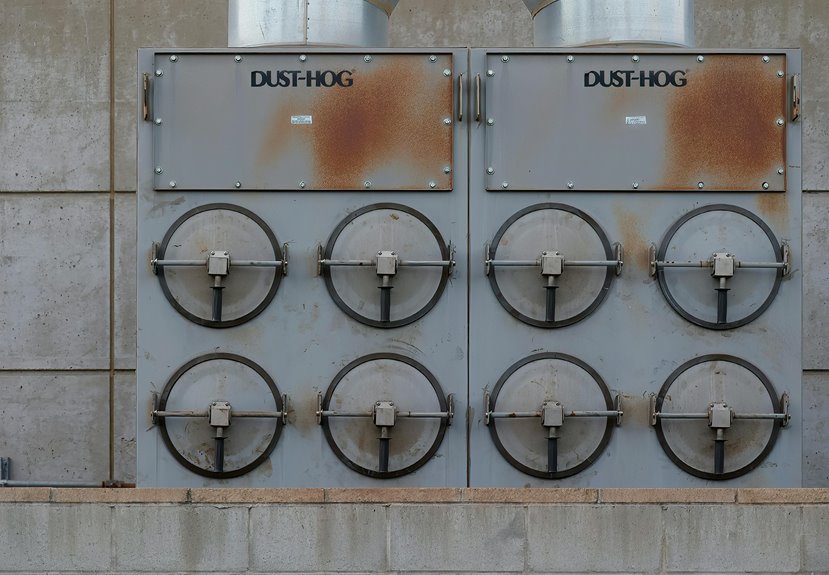

Dust in the air? A HEPA air purifier helps clear it fast. A solid HVAC filter catches more particles too. Clean vents, fans, and nearby surfaces so dust does not keep recirculating. Sealing gaps around doors and windows plus smart vacuuming can cut dust even more.
Why Dust Gets Airborne
Dust gets airborne as airflow, movement, and static electricity lift fine particles off surfaces and keep them suspended in the room.
You’re managing dust composition that often includes skin cells, fabric fibers, soil, pollen, and pet dander, so even light disturbance can re-enter the air.
Dry air and rough surfaces make release easier, which can lower air quality and make buildup feel unyielding.
As you walk, open doors, or run fans, you create currents that carry particles farther than you’d expect.
Static charge can also pull dust from nearby materials and hold it in suspension.
You’re not alone in this; every occupied space sheds debris continuously, so prevention starts with comprehending these forces.
How to Remove Dust From Air Faster
To remove dust from the air faster, one should run a HEPA air purifier continuously, because it captures fine particles before they settle.
Place the unit near the dust source and use the highest fan setting during active cleaning to increase air turnover.
Should you need faster results in a room, maximize airflow strength while keeping the HEPA filter in line for fine-particle capture.
HEPA Air Purifiers
A HEPA air purifier can cut airborne dust quickly because it pulls room air through a pre-filter, then a HEPA filter that captures fine particles as small as 0.1–0.3 microns, and often a carbon stage for odors.
With HEPA technology, you support better air quality in the rooms where you reside and breathe together.
- Place it in your bedroom or main area.
- Run it continuously on low for steady dust control.
- Check and replace filters on schedule.
You’ll notice less visible dust on surfaces and fewer particles staying suspended after cleaning.
For the best results, keep doors mostly closed so the purifier can cycle room air efficiently.
Should you desire your home to feel cleaner and more welcoming, this tool gives you a reliable baseline.
Increase Airflow Strength
Should one want dust removal to happen faster, increase the purifier’s airflow during active cleaning so it pulls more room air through the pre-filter and HEPA filter in less time.
You’ll get quicker particle capture once you switch to the highest fan setting for 30 to 120 minutes, then return to a quieter low mode for maintenance.
Position the unit near dust sources and keep doors closed so airflow techniques stay efficient.
Avoid blocking intake or exhaust grilles, because restricted flow cuts performance.
Should your home uses ventilation systems, run them with filtered make-up air to limit re-entry of dust.
You’ll notice cleaner surfaces sooner once you pair strong airflow with steady room circulation, especially in bedrooms and areas where dust tends to settle.
Use an Air Purifier
Choose an air purifier with a true HEPA filter rated to capture fine dust particles, and size it for the room where you spend the most time.
Place it near dust-prone areas and run it continuously on low, using a higher fan setting during cleaning.
You’ll also need to maintain it through checking the pre-filter, replacing the HEPA filter on schedule, and cleaning components as directed.
Choosing the Right Purifier
Whenever you wish to remove dust from the air effectively, use a HEPA air purifier sized for the room, since HEPA filters capture up to 99.9% of particles as small as 0.1–0.3 microns.
Choose purifier types through checking CADR, room coverage, and noise, so you improve air quality without sacrificing comfort.
- Match the unit to your square footage.
- Prioritize true HEPA filtration with a pre-filter.
- Pick a model you can run quietly every day.
Place it near dust-prone zones, like bedrooms or residential areas, where you spend time with your household.
Should you desire faster cleanup, run the highest setting briefly, then switch to low for steady dust control.
That way, you’ll keep your space cleaner, healthier, and easier to share.
Filter Maintenance Tips
To keep your air purifier working at peak efficiency, clean the pre-filter regularly and replace the HEPA filter on schedule, since a clogged filter lowers airflow and dust capture.
You should inspect the unit monthly, vacuum the pre-filter, and observe the filter lifespan in the manufacturer’s guide. Should you run the purifier daily in a dusty room, expect filter replacement sooner than standard intervals.
Keep vents clear, seal the housing tightly, and avoid placing the unit behind furniture, where intake gets restricted.
Once the indicator light signals service, act promptly so your household maintains steady dust control.
Use genuine replacement filters, because off-brand media can reduce performance.
Through staying consistent, you’ll protect everyone in your space and keep the air cleaner between cleanings.
Choose the Right Air Filter
A high-efficiency air filter can make a noticeable difference in how much dust stays airborne in your home.
Whenever you compare air filter types, match the rating to your needs: denser media captures finer particles, but it can also restrict airflow should your system struggle with it.
Check the filter lifespan, because a clogged filter loses efficiency fast and can push dust back into your space. You’re part of a cleaner, calmer home whenever you choose well.
- Read the manufacturer’s pressure limits.
- Select the highest-efficiency option your system supports.
- Replace it on schedule, not through guesswork.
Choose a filter that balances capture efficiency, airflow, and cost. That’s how you keep your indoor air cleaner without straining your equipment.
Choose HVAC Filters That Trap Dust
You should choose an HVAC filter with a MERV rating high enough to capture fine dust without restricting airflow in your system.
Should your unit support it, a HEPA filter can trap much smaller particles and reduce dust recirculation more effectively.
Check the filter specs against your HVAC’s limits, then replace it on schedule to keep performance stable.
Filter MERV Ratings
MERV-rated HVAC filters help trap airborne dust before it circulates through your home, and higher ratings usually capture smaller particles more effectively.
You should compare MERV ratings against your system’s airflow limits so you don’t reduce comfort or strain the blower. Better filter efficiency can improve dust control, but the best choice fits your unit and your household needs.
- MERV 6–8: basic dust capture, low resistance.
- MERV 9–11: stronger dust filtration for most homes.
- MERV 12–13: finer particle capture, provided your HVAC supports it.
Check the manufacturer’s specs, replace filters on schedule, and seal gaps around the frame.
At the time you choose correctly, you join the group of homeowners keeping indoor air cleaner without sacrificing system performance.
HEPA Filter Benefits
HEPA filters take dust control a step beyond standard HVAC filtration through capturing very fine particles before they recirculate through your home.
You get higher HEPA efficiency because the dense media traps dust, pollen, and lint that lower-rated filters miss. That means cleaner supply air, less surface buildup, and fewer particles settling on bedding and furniture.
To keep performance steady, choose a filter that matches your system’s airflow rating, then check it monthly. A good seal around the frame prevents bypass, which protects both air quality and filter lifespan.
Replace the filter on schedule, or sooner should you see heavy loading. Whenever you pair HEPA filtration with regular vacuuming and humidity control, you create a tighter dust-control system that works with your home.
Open Windows the Right Way
Whenever outdoor conditions are dry and low in pollen, open windows strategically to exchange stale indoor air without pulling in excess dust. You can improve the exchange by choosing short, deliberate ventilation periods rather than leaving openings wide all day.
Use window screening to slow larger particles and keep an eye on nearby outdoor pollutants before you open anything.
- Open windows on the cleaner side of your home initially.
- Cross-ventilate by pairing opposite windows for a quick air sweep.
- Close them once the indoor air feels refreshed and stable.
You’ll fit in with a dust-aware routine whenever you ventilate at calmer times, like after rain has cleared debris but before traffic peaks.
This keeps airflow useful, limits particle entry, and supports a cleaner indoor environment.
Control Humidity to Reduce Dust
Keep your indoor humidity below 50% to limit dust mites and reduce the static charge that helps dust cling to surfaces.
You can monitor the level with a hygrometer and adjust it as needed. Should humidity run high, use a dehumidifier to hold the room in the ideal range and support lower dust accumulation.
Ideal Indoor Humidity
- Place a hygrometer in bedrooms and residential areas.
- Check readings at different times of day.
- Adjust ventilation should levels drift upward.
When you keep moisture in range, dust settles less aggressively, and you’ll notice cleaner surfaces with less frequent buildup.
This simple control helps your home feel more comfortable, stable, and easier to maintain together.
Use A Dehumidifier
A dehumidifier gives you direct control over indoor moisture, which helps cut down on dust mites and the static that makes dust cling to surfaces.
Set dehumidifier settings to keep relative humidity below 50%, ideally around 40% to 45% for steady moisture control.
Place the unit in the rooms where you spend the most time, especially bedrooms and living areas, so the air stays drier where dust builds fastest.
Empty the reservoir regularly or connect a drain hose to keep performance consistent.
Clean the filter as directed, because a clogged filter reduces airflow and efficiency.
At the time you pair this with HEPA filtration and routine vacuuming, you create a cleaner, more comfortable space that supports everyone who shares your home.
Upgrade to HEPA Vacuuming
Upgrading to a vacuum with a HEPA filter can make a noticeable difference because it captures fine dust instead of blowing it back into the room. You’ll help your home feel cleaner and more comfortable, especially in case you deal with dust allergies.
Use these steps:
- Set the vacuum settings for the surface, then move slowly so the filter can trap particles effectively.
- Make two or three passes over carpets, upholstery, and mattresses to lift embedded dust.
- Clean hard floors and use attachments for edges, vents, and fabric surfaces.
Vacuum weekly, or more often in the event that you have pets. Change filters on schedule, and check for a tight seal so dust doesn’t leak out.
At the time you use the right machine, you’re part of a smarter, healthier cleaning routine.
Choose Dust-Resistant Fabrics and Flooring
Should one want to cut down on airborne dust, start with the surfaces that hold onto it most: your fabrics and flooring.
You’ll do better with tight weaves, smooth finishes, and washable covers that don’t trap particles. Choose natural fabric options like cotton, linen, or wool blends with low pile, because they shed less lint than loose synthetics.
For upholstery, pick removable slipcovers you can launder hot, and avoid heavy textures that catch debris.
For flooring materials, hard surfaces such as sealed wood, tile, or vinyl release dust more easily than deep carpet.
Should you prefer rugs, select low-pile, tightly bound styles and vacuum them thoroughly.
You’ll create a cleaner shared space whenever every surface supports easier dust control.
Reduce Dust Sources Indoors
To reduce indoor dust at the source, limit the materials and conditions that generate it in the initial place. You can cut dust sources through choosing low-shed textiles, storing clutter in closed bins, and sealing gaps where outdoor indoor pollutants enter.
Keep humidity below 50% so dust mites and static don’t amplify buildup.
- Remove cardboard piles, old papers, and loose fabric that shed particles.
- Repair leaks fast; moisture drives mold, mites, and other indoor pollutants.
- Wash bedding weekly in hot water and use washable covers on mattresses and pillows.
When you simplify your space, you make it easier for your home team to stay ahead of dust.
That shared routine lowers airborne load, protects surfaces, and keeps your rooms cleaner longer.
Clean Vents and Ceiling Fans
Once you’ve reduced the main dust sources indoors, clear the parts of the room that keep recirculating what’s left.
Shut off HVAC power before vent maintenance, then remove grilles and vacuum both sides with a brush attachment. Wipe the metal or plastic surfaces with a damp microfiber cloth; don’t dry-dust, because it sends particles back into the air.
Check filters and seal gaps around the register so airflow stays controlled.
For ceiling fan cleaning, lower the blades only when needed, then wipe each blade from hub to tip with a lightly damp cloth or pillowcase. Clean slowly so dust falls onto a sheet below, not your floor.
Repeat every month, or more often in busy rooms, so your shared air stays cleaner, steadier, and easier to breathe.
Can Houseplants Help Reduce Dust?
Houseplants can help with dust control, but they won’t replace vacuuming or filtration. You get the best plant benefits whenever you choose houseplant types with broad, wipeable leaves, such as rubber plants, peace lilies, or pothos. They can intercept floating dust, while you still need to clean surfaces.
- Wipe leaves weekly with a damp cloth to prevent buildup.
- Water only as each plant needs, so you avoid stress and leaf drop.
- Prune dead foliage to keep growth healthy and dust-catching surfaces active.
You’ll also support cleaner indoor air whenever you group plants near low-traffic spots, then pair them with HEPA cleaning. That gives you a practical, shared path toward a fresher room.
Time Cleaning to Catch Dust Before It Settles
Should you clean before dust has time to settle, you can remove more particles with less effort. You’ll get better results whenever you work in a consistent cleaning schedule that targets fresh debris after vacuuming, moving air, or opening high-use rooms.
Dust settling starts quickly on horizontal surfaces, so wipe shelves, electronics, and furniture soon after activity, while particles are still loose. Use a microfiber cloth, then vacuum nearby floors to capture what falls.
In case you wait, dust bonds to surfaces and spreads as you wipe. Clean top to bottom, room to room, so you stay efficient and feel in control.
Through timing your routine this way, you help your home stay cleaner between sessions and reduce the buildup your household keeps fighting.
Seal Leaks Around Doors and Windows
Should dust keep returning no matter how often you clean, leaks around doors and windows could be letting in outdoor particles. You can stop that infiltration through inspecting frames, sills, and thresholds for gaps, cracked caulk, or worn weather stripping.
Replace damaged weather stripping to maintain a tight compression seal, and apply draft sealants to hairline openings where air moves freely.
- Close the door and window, then feel for moving air with your hand.
- Use a smoke pencil or tissue to pinpoint the leak path.
- Seal the opening, then retest until airflow stops.
When you tighten these entry points, you reduce dust, pollen, and lint before they spread through your space.
That helps your room feel cleaner and more comfortable, and you’ll know your home is working with you.
Frequently Asked Questions
How Often Should Bedding Be Washed to Reduce Airborne Dust?
Wash your sheets and pillowcases once a week using hot water to help limit dust mites and lower dust in the air. If your bedding traps moisture easily or you sleep with pets, regular washing matters even more.
What Essential Oils Work Best in Homemade Dusting Spray?
Lavender, lemon, and tea tree essential oils are effective in homemade dusting sprays; add 10 to 15 drops. Since about 80 percent of dust settles on surfaces, use a microfiber cloth for better capture and a light scent.
Should Microfiber Cloths Be Used Damp or Dry for Dusting?
Use microfiber cloths slightly damp for most dusting jobs, and dry them for quick touch ups. This helps trap particles more effectively, cuts down on streaks, and makes better use of the cloths ability to hold dust. Use careful dusting techniques, and your surfaces will stay cleaner longer.
How Do I Clean Dust From Electronics Without Damaging Them?
Turn off the device first. Use a microfiber cloth with just a faint mist of homemade cleaning spray, then wipe the surface with light strokes. Keep moisture to a minimum, and choose anti static cleaning tools to lower the risk of static buildup and damage.
How Often Should Air Purifier Filters Be Replaced?
Replace your air purifier filter every 3 to 12 months, based on the filter type and how much you use the unit. Watch for replacement alerts, weaker airflow, and lingering odors. If you run it every day or have pets, replace it sooner.
