

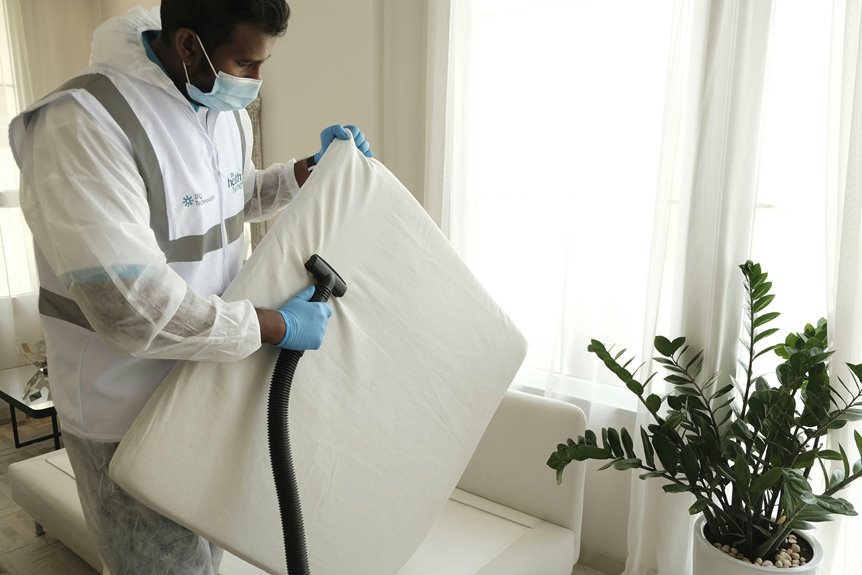

You catch that damp, stale scent as you pull back the sheets, and it can make your whole room feel off. A musty mattress usually hides moisture, dust, or old spills, but you can fix it with a few smart moves. Start opening the room, then work through drying, cleaning, and odor control so the smell doesn’t keep returning.
What Causes a Musty Mattress Smell?
A musty mattress smell usually starts with trapped moisture, and that moisture can come from your own sweat, a small spill, or a room that never gets enough fresh air.
Whenever you sleep warm, damp fibers hold onto odor and let mildew settle in. Poor cleaning can leave tiny food or skin bits behind, and those can feed germs. Humidifiers misuse can add too much dampness, especially in small bedrooms.
Storage practices matter too, because a mattress sealed in a closet or laid flat in a basement can stay stale for weeks.
Should you notice dark spots, the problem might be deeper than smell alone. You’re not stuck with it, though. Once you know the source, you can tackle the odor with real confidence.
Air Out the Musty Mattress
Once you’ve found the source of that stale smell, your next move is to let the mattress breathe. Open windows wide so fresh air can move through the room, and pull back blankets so the surface can dry faster.
Should you be able to, place the mattress where sunlight reaches it for a few hours, because warmth helps chase out trapped dampness. Then rotate mattress so the same side doesn’t hold all the moisture and odor.
Give both sides time to air out, and keep fans running should the room feel still. You’re not fixing this alone, and that matters. With steady airflow, your bed can start feeling clean, lighter, and more like a place you want to come back to tonight.
Vacuum Away Dust and Debris
Vacuuming is the next smart move because dust, dead skin, hair, and crumbs can cling to the mattress and feed that stale smell. You’ll feel better once you see the surface clean up, and that fresh start can make the room feel more like yours.
- Use a clean upholstery tool so you don’t grind dirt deeper in.
- Move slowly in overlapping lines for better deep cleaning.
- Check seams, tufts, and edges, where debris likes to hide.
- Pick strong suction strength, but avoid rough brushes that can snag fabric.
After you finish, your mattress should look lighter and feel less heavy with grime. Should you share the bed, this step helps everyone breathe easier and enjoy a cleaner, cozier place to rest.
Use Baking Soda to Deodorize
Sprinkle a generous, even layer of baking soda across the mattress surface and let it sit, because this simple step can pull out the stale odor that vacuuming couldn’t reach.
You’re giving your bed a fresh reset, and that can feel oddly comforting. Baking chemistry helps here, since the powder binds with acidic smells and lifts them away.
According to odor science, it also absorbs lingering moisture that feeds musty air. Let it rest for a few hours, then vacuum it slowly with an upholstery tool.
Should your room smells closed in, open a window so the treatment works even better. With this easy habit, you can make your mattress feel cleaner, calmer, and more welcoming for you each night.
Remove Stains and Damp Spots
Stains and damp spots can spread quietly, so it helps to act promptly before they settle in deeper.
- Blot the area with a clean towel and press, don’t rub, so you keep the spot from spreading.
- Use a gentle spot treatment made for fabric, then follow the label so you don’t damage the surface.
- For stubborn marks, wipe with a small mix of mild soap and water, then lift the moisture with a dry cloth.
- Once the stain fades, add fabric protection on your bedding or mattress cover to help block future spills.
When you handle these marks promptly, your mattress feels fresher, and you can relax aware you’ve done your part.
A little care now helps you keep a cleaner sleep space that feels like home.
Dry the Mattress Completely
A mattress can still hold onto dampness long after a spill or sweat spot looks dry, so you need to dry it fully in case you want the odor to leave for good. You’re not alone whether this feels fussy; a little patience here protects your sleep space. Check moisture indicators like a cool touch, darker fabric, or a faint wet smell.
Then open windows, aim a fan at the bed, and let air move through every layer. | Check | What to notice |
| Touch | Cool or clammy areas |
|---|---|
| Look | Dark patches or shadowing |
| Smell | Musty scent near seams |
| Air | Gentle flow across surface |
| Time | Several hours, sometimes longer |
Turn the mattress and repeat until it feels dry everywhere. That steady effort helps your room feel fresh and welcoming again.
Prevent Musty Mattress Odors
Keeping a mattress from getting musty starts with stopping moisture before it settles in. You can protect your sleep space with simple habits that feel easy to keep.
- Use moisture barriers under sheets and protect against sweat, spills, and damp nights.
- Choose breathable covers that still block liquid, so air can move while grime stays out.
- Lift the mattress on a sturdy frame for better bed frame ventilation, since trapped air feeds odors.
- Wash bedding often and let it dry fully before you remake the bed.
When you build these steps into your routine, your room feels fresher and more welcoming. Small choices matter here, and they help you stay comfortable without much fuss.
In case a spill happens, act fast, dry it well, and keep the airflow going.
When to Replace a Musty Mattress
Should your mattress still smell musty after you’ve cleaned it, dried it, and aired it out, it could be time to contemplate replacement. If the odor returns fast, or you spot black marks, your replace timeline is short. Mold can hide deep inside, and that brings health risks you shouldn’t ignore.
| Sign | What it means | Next step |
|---|---|---|
| Strong smell | Moisture stayed trapped | Compare your replace timeline |
| Black spots | Deep mold growth | Replace now |
| Worsening allergies | Health risks could be rising | Stop sleeping on it |
If you’ve tried drying and the smell still lingers, trust your body and your space. You deserve a bed that feels safe and fresh, not one that keeps bugging your nose at night.
Frequently Asked Questions
How Can I Tell if Mattress Odor Is From Mold or Mildew?
You can identify it by checking the mattress closely and smelling it. Black or fuzzy spots, along with a strong earthy smell, usually point to mold. Mildew tends to have a lighter damp smell that is less sharp.
Are Essential Oils Safe to Use on Every Mattress Type?
No, essential oils are not safe for every mattress type. Check how the mattress material reacts first, and if you have sensitive skin, test a small hidden area or avoid using them altogether.
Can I Remove Musty Smells From a Memory Foam Mattress?
Yes, you can get rid of musty odors in a memory foam mattress. Sprinkle baking soda over the surface, leave it for several hours, vacuum it away, and let fresh air or sunlight help dry and deodorize the mattress.
How Long Does Vinegar Take to Stop Mattress Odor Completely?
Vinegar usually stops odor in 4 to 8 hours of drying time, though stubborn smells may need overnight. You will notice its effect once the mattress dries, and then the vinegar smell fades, leaving the mattress fresh again.
What Should I Do if the Smell Returns After Cleaning?
If the smell comes back, check for damp spots, let fresh air move through the area, and clean it again. Store bedding in a dry place and look for mold stains, since a more thorough treatment may be needed.
