

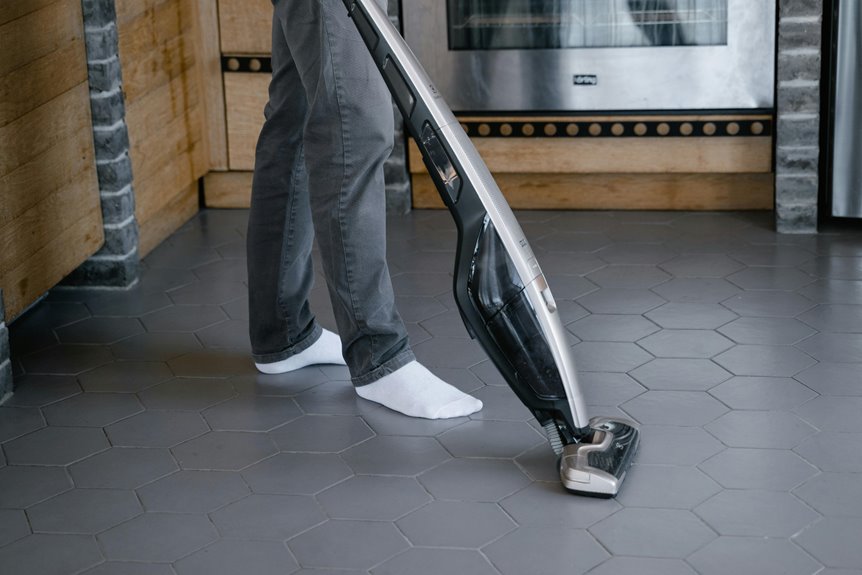

When you notice muddy footprints on your porcelain tile after a busy morning, you can clear them fast with the right steps. You’ll start through lifting grit so it doesn’t scratch, then use a damp mop with a gentle cleaner to avoid streaks and dull film. After that, you can tackle stains and grout without panic, and the trick to keeping that fresh shine could be simpler than you believe.
How to Clean Porcelain Tile Floors Safely
Start with a gentle clean, and your porcelain tile will thank you.
First, sweep or vacuum loose grit with a soft brush so you don’t scratch the surface.
Then mop with warm water and a mild, pH-neutral cleaner, and rinse well so no film stays behind.
Should you need a stronger touch, choose a tile-safe product that matches your finish, but skip harsh pads and gritty powders.
Wipe the floor dry with a soft cloth, because that helps with slip prevention and keeps water spots away.
Change dirty mop water often, and clean spills right away.
In the event you use specialty cleaners, wear gloves to lower chemical exposure and keep your space comfortable.
With these simple steps, you can keep your floor bright, safe, and welcoming.
Gather the Best Supplies for Porcelain Tile
To keep your porcelain tile looking its best, you need the right tools from the start. Choose soft-bristle brooms, microfiber cloths, non-scratch sponges, and cleaners made for your tile finish so you don’t damage the surface.
Should you be tackling grout too, grab a nylon brush and a gentle grout cleaner to make the job easier and safer.
Essential Cleaning Tools
Gathering the right tools makes porcelain tile cleaning feel much easier, and it helps you protect that smooth finish from day one. You’ll fit right in whenever you keep a soft microfiber mop, a soft-bristle broom, and a non-scratch sponge nearby. These basics help you lift grit without rubbing the tile hard.
- Soft broom or vacuum for daily dust pickup
- Microfiber mop and cloths for gentle washing and drying
- Nylon grout brush with ergonomic handles for tight spots
A small caddy keeps your supplies together, and good tool maintenance means washing pads, emptying dirty water, and checking for worn edges.
That way, you’re always ready for the next cleanup. Whenever your tools feel easy to grab, you’ll clean more often and keep your floors looking like they belong in a cared-for home.
Safe Tile Cleaners
Now that you have the right tools in hand, the next step is choosing cleaners that won’t wear down your porcelain tile or leave behind a dull film.
You want a neutral pH cleaner or a mild soap mixed with warm water, because these stay gentle and still lift everyday dirt.
Should your tile have a matte or silk look, pick a detergent made for that finish, and in case it shines, choose one without abrasives.
For a safer home, you can also use simple baking soda blends, which many people trust alongside natural sealants.
Just check the label initially, since commercial regulations can differ by product and surface.
Then rinse well, dry the floor, and you’ll keep your space looking fresh, bright, and easy to love.
Helpful Grout Supplies
Stocking the right grout supplies can make porcelain tile care feel far less stressful. Provided you’ve got the basics ready, you can clean grout with confidence and keep your floor looking like it belongs in your home, not a chore list.
- Soft nylon brush for scrubbing lines without scratching tile
- Grout sealer to block moisture and stains after cleaning
- Colorant restoration kit provided your grout needs a fresh, even look
You’ll also want microfiber cloths, a small bucket, and rubber gloves for safer work. Choose pH-safe cleaner that fits your tile finish, then test it in a concealed spot. With these supplies nearby, you can tackle buildup faster and protect the grout that frames your porcelain so nicely.
Sweep and Vacuum Porcelain Tile First
Start sweeping or vacuuming up loose dirt, dust, and grit so you don’t grind them into the tile while you clean. Pay close attention to edges and corners, where debris likes to hide and turn into stubborn messes later.
A soft-bristle broom or a vacuum without a beater bar works best, and it keeps your porcelain looking smooth and cared for.
Remove Loose Dirt
Before you add any water or cleaner, sweep or vacuum your porcelain tile floor to lift away loose dirt, dust, and grit. That initial pass keeps the mess from turning into muddy streaks, and it helps your space feel cared for.
In case you share the home with kids, guests, or furry friends, this step matters even more because entryway mats and pet paws track in tiny particles that hide fast. Try this simple routine:
- Start at the far side and work back.
- Use a soft broom or vacuum without a beater bar.
- Focus on crumbs, hair, and grit in open areas.
When you clear the loose stuff initially, the rest of your cleaning feels easier, smoother, and more like a team effort for your whole home.
Vacuum Edges Thoroughly
Once you’ve cleared the open floor, give the edges the same careful attention, because dust loves to conceal where the baseboard meets the tile. Move your vacuum slowly along every wall, then angle the head into corners so nothing gets left behind. Use edge attachments for tight spots, and switch to strong corner suction near door frames, cabinets, and vents. In case your vacuum has a soft brush, let it skim the seam without scraping the porcelain. You’ll feel better appreciating the concealed grit is gone before you mop.
Also, check under trim lips and behind toe kicks, where crumbs like to camp out. A careful pass here keeps dirt from turning into muddy streaks later, so your floor stays cleaner, smoother, and more welcoming for everyone who walks in.
Mop Porcelain Tile Without Streaks or Film
At any time you mop porcelain tile, a little care goes a long way, because the wrong mix or too much water can leave dull film and streaks behind. Use a microfiber technique with a lightly damp mop, not a soaking one, so the tile feels clean, not slick.
Warm water works best, and the right water temperature helps your cleaner spread evenly.
- Fill one bucket with diluted neutral cleaner and another with rinse water.
- Wring the mop hard after each pass so moisture stays low.
- Rinse and dry small sections before moving on.
If the water looks cloudy, swap it out fast. That simple habit keeps your floor looking bright and helps you feel proud every single time you walk into the room.
Remove Stains and Grout Haze From Porcelain Tile
Stubborn stains and cloudy grout haze can make even a clean porcelain floor look tired, but you can clear them without damaging the tile. Start with chemical testing on a concealed spot, because porcelain finishes can react differently. Then apply a tile-safe cleaner to the stain and let it rest for a few minutes. Use a damp microfiber cloth or a white non-scratch sponge, and work in small circles with gentle pressure.
For grout haze, soften the film with warm water and wipe it away before it hardens again. In case the floor still looks dull, use a grout-safe paste on the lines only, then rinse well. This careful approach supports color restoration, so your floor feels bright, fresh, and ready to belong in the room again.
Maintain Porcelain Tile Floors Between Cleanings
Between full cleanings, you can keep porcelain tile looking fresh with a few small habits that protect the surface and save you work later. You’re not alone in this; little upkeep really does make a big difference.
- Sweep grit fast so it doesn’t scratch.
- Do regular touchups with a damp microfiber cloth.
- Check busy spots with spot inspections, then wipe spills right away.
Keep a soft mat at entries, since shoes bring in dirt like tiny troublemakers.
Should you notice cloudy film, use a little warm water and mild cleaner, then dry the tile so it stays bright.
Also, take a quick look at grout lines as you pass along. That simple habit helps you catch messes sooner and keeps your floor feeling cared for, not constantly tired.
Frequently Asked Questions
Can I Use a Steam Mop on All Porcelain Tile Finishes?
No, you cannot use a steam mop on every porcelain tile finish. Check whether the finish is steam safe first, since high heat can damage delicate surfaces and affect grout. Test a small area before cleaning the whole floor.
How Do I Clean Textured Porcelain Tile Without Damaging It?
Use a soft bristle brush with a pH neutral cleaner, then mop with warm water, rinse thoroughly, and dry the surface. Avoid heavy scrubbing to keep the texture intact and prevent scratches.
What Should I Do if Porcelain Tile Has Hard Water Deposits?
Use a vinegar rinse to dissolve hard water deposits, then wipe with a lemon polish. Stubborn spots can fade quickly, leaving the floor clean and bright.
How Often Should I Seal Porcelain Tile Grout Lines?
Seal porcelain tile grout lines after installation, then reseal them once a year as part of routine upkeep. In busy areas, apply a new sealer every six months to help block stains and keep the grout looking clean and protected.
Is It Safe to Use Bleach on Porcelain Tile Floors?
Bleach can be used in small amounts, but it is not the best option for porcelain tile floors. A pH neutral cleaner is safer for the tile and grout, and any bleach use should be limited with good ventilation and a well rinsed surface.
