

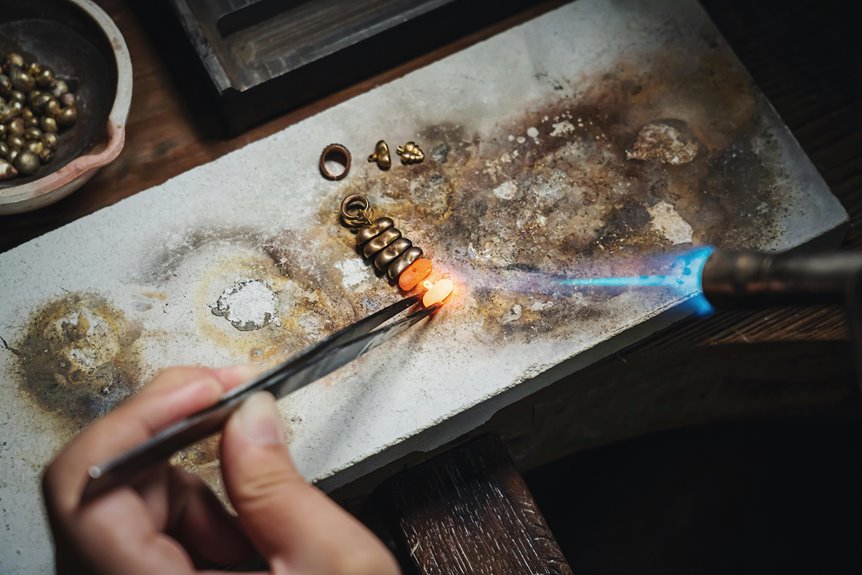

Metal jewelry can look dull fast, but fortunately most pieces just need a gentle reset. You’ll start checking the metal, since silver, gold, stainless steel, and plated pieces all need different care. Then you can use mild soap, lukewarm water, a soft brush, and a microfiber cloth to lift grime without scratching the shine. Once you know what to avoid, the cleaning gets much easier.
Gather Mild Soap, Soft Brushes, and Cloths
Start alongside gathering the right cleaning basics, because the tools you choose can make jewelry care feel easy instead of risky. You’ll want mild dish soap, warm water, a soft-bristled toothbrush, and a microfiber cloth. These simple items help you lift away grime without adding scratches or stress. Skip scented soaps, since they can leave a film that clings to tiny details.
Keep a small bowl nearby, and set a clean drying rack or towel in place before you begin. That way, you won’t scramble with wet pieces in your hands. In case you like, add a jewelry polishing cloth for the final shine. With these basics ready, you can clean confidently, protect your favorite pieces, and feel like you belong in the know.
Identify Your Metal Jewelry Type
Before you clean your jewelry, you need to know what metal you’re working with so you don’t damage it.
Check for stamps, hallmarks, or other small marks that hint at the metal type and composition.
Also look closely at plating and finishes, since they can change how you should clean the piece.
Determine Metal Composition
The quickest way to protect your jewelry is to figure out what it’s made of, because each metal reacts differently to cleaning. Check for hallmarks initially, then use a loupe provided the stamp looks faded or tiny. Should you still can’t tell, gentle metal testing or alloy analysis can help you name the metal without guessing.
Once you determine whether you’re handling silver, stainless steel, brass, or a mixed alloy, you can choose a safer cleaner and keep the piece in your style circle. Whenever the material feels uncertain, ask a jeweler before you scrub. That one step can save you from dulling a favorite chain or bending a delicate clasp.
Understanding the metal also helps you clean with confidence, so your pieces stay bright and ready to wear.
Check Plating And Finishes
Check the finish with a close eye, because plating can change how you clean metal jewelry. Should you see thin gold, silver, or rhodium layers, treat them gently.
A soft cloth and mild soap usually work best, since scrubbing can wear through the coating and expose the base metal underneath. Also look for edge coatings, because they chip first and need extra care.
Antique finishes deserve even more caution, since they’re meant to stay slightly aged, not shiny. You can test concealed spots with a damp cotton swab before you clean the whole piece.
In case the surface feels delicate, skip harsh polish and let it stay in the style it was made to show. That way, your jewelry keeps its look and fits right in with your collection.
Clean Metal Jewelry With Soap and Water
Soap and water often do the job beautifully whenever your metal jewelry just needs a gentle refresh. Use lukewarm water, because the right water temperature helps loosen grime without shocking delicate pieces. Add a few drops of mild dish soap; a low soap concentration keeps the mix gentle and effective. Then let your jewelry rest for a few minutes so dirt can soften.
Next, use a soft-bristled toothbrush to sweep around links, clasps, and tiny corners. Rinse each piece under clean water until no suds remain. After that, pat it dry with a soft cloth or microfiber cloth. You’ll bring back a clean, cared-for look that feels easy, familiar, and totally doable.
Treat Silver Tarnish Safely
After a silver piece still looks dull following a gentle wash, you can move to a safer polish that lifts tarnish without being harsh.
Use a silver paste sparingly on a soft cloth, then rub in small circles with light pressure.
In case you reach a dark spot, keep going patiently instead of scrubbing hard.
For tight corners, a cotton swab helps you stay gentle.
Rinse the piece well and dry it right away so moisture doesn’t invite more tarnish.
You can also store silver in a dry pouch, away from air and sulfur prevention sources like rubber bands or cheap paper.
That little habit helps your favorite pieces stay bright, so they feel ready for the moments you want to wear them with satisfaction.
Polish Gold and Stainless Steel
You can bring back gold’s warm glow through using a gentle cleaner and a soft cloth, so you won’t scratch the finish.
For stainless steel, a little soap, water, and light rubbing usually restore its shine without much effort.
Whenever you work carefully, both metals look polished and fresh without extra stress.
Gold Polishing Methods
Whenever gold starts to look dull, a gentle polish can bring back that warm, rich shine without much fuss.
First, check karat identification so you know how soft your piece is.
Then choose acid free polishing to protect the surface and keep it looking cared for.
You can use a clean microfiber cloth and small, even strokes, which helps you stay in control and avoid harsh pressure.
If tiny details catch grime, fold the cloth and work those spots with patience.
For extra comfort, polish in good light so you can see the glow return.
As you go, your jewelry starts to feel like part of your everyday style again, not just something tucked away.
Stainless Steel Shine
A quick shine routine can make stainless steel jewelry look crisp again, and it usually takes less effort than people expect.
You can start with warm water and mild soap, then wipe the piece with a soft cloth so you don’t scratch that cool, mirrorlike surface.
- Use a soft toothbrush for tiny grooves.
- Rinse well so no soap stays behind.
- Dry right away to stop water spots.
If you still see dull patches, try a jewelry-safe industrial grade polish made for stainless steel.
Then buff gently in one direction.
For extra protection, choose pieces with an anti corrosion coating, since they stay bright longer and fit your everyday style better.
Whenever you care for them this way, your favorite chain or bracelet keeps its clean, confident look and feels ready for anything.
Avoid Common Jewelry Cleaning Mistakes
Cleaning metal jewelry should feel simple, not scary, and most mistakes happen as people rush or use the wrong product. You can protect your favorite pieces through working slowly and choosing gentle tools.
To start, avoid abrasives, because rough powders and hard scrubbers can leave tiny scratches that dull the shine. Next, skip submersion should a piece have glued stones, mixed metals, or a finish that might weaken in water. Also, don’t mix cleaners just so as to get a faster result; that can create a mess and damage the surface.
Instead, test one mild method, use a soft cloth, and rinse carefully. In case you spot tarnish or grime in a tight corner, a soft toothbrush works better than force. Your jewelry deserves calm care, and so do you.
Store Metal Jewelry to Keep It Shiny
Tucked away after you’ve cleaned each piece, smart storage is what keeps metal jewelry looking bright instead of dull again. You want each item to stay in its own little safe space, so it doesn’t rub against friends and pick up scratches.
- Use airtight storage for boxes or pouches that seal well.
- Add silica packs or other humidity control helpers.
- Keep chains flat so they don’t knot up.
Also, store silver, steel, and mixed metals separately. That keeps finishes from reacting and helps your collection feel cared for.
Supposing you wear your favorites often, give them a soft pouch and a dry drawer spot. With the right home, your jewelry can stay ready for the next outing and keep that polished glow your style deserves.
Frequently Asked Questions
Can I Use Ultrasonic Cleaners on All Metal Jewelry?
No. Ultrasonic cleaners are not safe for every metal jewelry piece because different metals react differently and some items can be damaged by vibration, loose stones, glued settings, or soft alloys. Check the material and construction of your jewelry first.
How Often Should Metal Jewelry Be Deep Cleaned?
Deep clean metal jewelry every few months, and more often if you notice buildup from regular wear. Consistent care helps keep each piece bright and in good condition.
What Should I Do if Jewelry Has Gemstones Too?
Start by checking each gemstone’s hardness, then clean the piece with care. Look closely at the settings and make sure any adhesive is secure before soaking. Use mild soap and water, and skip steam cleaning. If you are unsure, take it to a jeweler to keep the jewelry safe and attractive.
Are Homemade Cleaning Pastes Safe for Antique Jewelry?
No, you should not use homemade pastes on antique jewelry. Even a single abrasive mixture can damage delicate finishes. You will protect your keepsakes better with careful preservation methods, gentle cleaning, and expert advice instead.
Can Professional Jewelers Restore Severely Tarnished Pieces?
Yes, professional jewelers can often restore severely tarnished pieces through expert cleaning, polishing, and metal replating. They can bring back the jewelry’s shine and help protect it so it looks well cared for again.
