
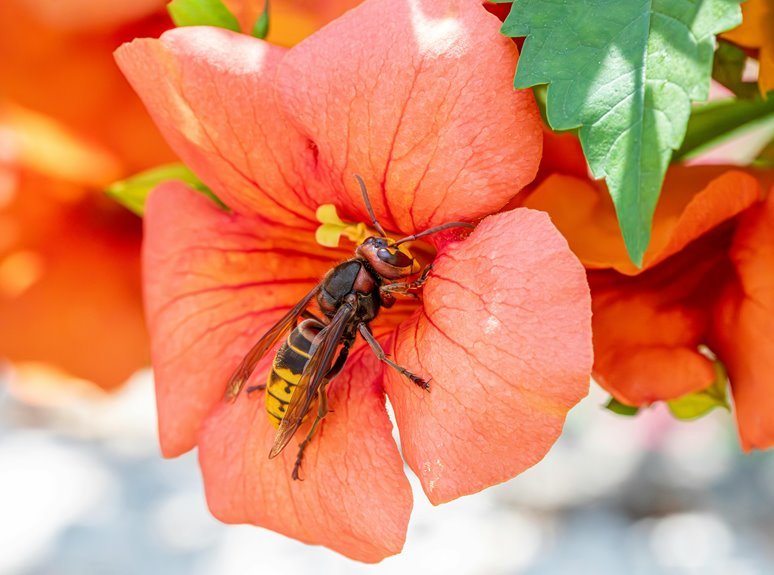

Hornets can be removed, but the safest method depends on the nest size, location, and how active the insects are. Small, easy-to-reach nests may call for a quick spray or trap. Bigger nests or spots close to your home usually need a more careful plan. The best fix starts with choosing the right method for the job.
How to Spot a Hornet Nest
To spot a hornet nest, look for a papery gray or tan structure hanging from eaves, trees, shrubs, or attic spaces, or for repeated hornet traffic entering a concealed opening in the ground or wall.
You can use nest identification tips to compare shapes: hornet nests often look round or football-shaped, with visible layered paper.
Watch hornet behavior observations too; workers usually fly a direct path to one spot and return repeatedly with little hesitation.
Should you notice steady activity at dusk, stay back and observe from a safe distance.
Check sheds, overhangs, and deck undersides, where nests often blend in.
Wear protective clothing while scouting, and keep children and pets nearby but away from the area.
Why Hornet Nests Are a Safety Risk
Hornet nests are a safety risk because the colony will defend the nest aggressively when disturbed, and a single mistake can trigger a rapid swarm of stinging insects. You’re handling nest aggression driven by territory defense, so even brief vibration, noise, or a wrong approach can put you in danger.
The nest location matters too: nests in walls, eaves, shrubs, or underground cavities can hide activity until you’re close. Stings can cause pain, swelling, and, for some people, severe allergic reactions that need urgent care.
Because hornets might attack together, you can’t rely on one warning sting to keep you safe. Should you and your household need a calm, predictable space, treat any active nest as a serious hazard and plan carefully before taking action.
Can You Remove the Nest Yourself?
Yes, one can sometimes remove a small nest oneself, but only provided that it can be done safely and the nest is easy to reach.
You should judge the size, location, and hornet activity before acting, because DIY safety depends on keeping distance and having a clear retreat path.
Should you choose to proceed, use proven nest removal techniques, work at dusk, and wear protective clothing.
- Keep children and pets away
- Stand far from the nest
- Have an exit route ready
- Treat only small, exposed nests
- Stop if hornets surge or you feel unsure
For larger nests, concealed entrances, or allergy concerns, you’re better off calling a professional.
That choice helps you protect your household and stay confident.
Use Soap and Water on Small Nests
For a small, exposed nest, you can often use a simple soap-and-water mix to kill hornets on contact. Mix water with dish soap, then load it into a sprayer or bottle you can control easily.
Good soap effectiveness comes from coating the insects and blocking their breathing openings, so you need steady coverage. Use application techniques that let you soak the nest thoroughly from a safe distance, especially at dusk while activity drops.
Aim at the nest entrance initially, then drench the outer surface until the suds stay in place. In case you belong to a household that wants a low-cost option, this method can fit well.
Check the nest the next day and repeat only in the event you still see movement.
Apply a Store-Bought Hornet Spray
Reach for a store-bought hornet spray during the moment you need a faster, longer-range option for an exposed nest. You’ll get better store bought effectiveness when you choose a product labeled for hornets and follow the directions exactly.
Aim the spray application from a safe distance, ideally at dusk while activity drops and more hornets are inside. Keep your stance steady, point the nozzle at the nest opening, and use a direct stream until the nest is fully coated.
- Wear protective clothing and eye protection.
- Read the label before you start.
- Stand upwind when possible.
- Treat the nest opening thoroughly.
- Leave the area if hornets swarm.
Should the nest be large or hard to reach, call a licensed professional.
Set Up Hornet Traps
Set your hornet traps where hornets already fly, but keep them a safe distance from doors, patios, and high-traffic areas.
Use a bait that matches their food sources, such as sugary liquid or protein-based attractants, and avoid overfilling the trap.
Check the traps regularly, replace the bait as needed, and empty them before they lose effectiveness.
Trap Placement Tips
Place your hornet traps where hornets already travel, but keep them far enough from people, doors, patios, and play areas so you don’t draw them toward activity.
Choose trap locations along fence lines, shrubs, and property edges, where traffic is steady but indirect. Match trap types to the space: hanging models work under eaves, while grounded units suit open yards.
- Set traps 20 to 30 feet from gathering areas.
- Place them between the nest and your home.
- Use several trap locations for better coverage.
- Keep traps shaded and easy to check.
- Reposition should captures stay low.
You’ll help your household stay safer whenever traps intercept hornets before they reach shared spaces.
Best Bait Choices
For the best results, choose bait that matches the hornets you’re targeting and the time of year. In warm months, use protein-based hornet bait such as cat food mixed with juice, since workers often seek meat to feed the colony.
Later in the season, switch to sweet effective lures like fruit juice, soda, or a little sugar water. You’ll get better results when you use fresh bait and keep the scent strong.
Place the bait inside your trap so hornets can enter easily and feed before escaping. Avoid overfilling the container, because a small amount attracts them without spilling.
Should you be testing different options, use separate traps so you can see which bait draws the most hornets in your area.
Monitor And Replace
Check your traps regularly so you can keep them working at full strength.
During nest monitoring, inspect each trap for captured hornets, leaked bait, and weather damage. Empty full containers before they overflow, and refresh attractants as they dry out or lose scent.
Use replacement strategies that match your setup: swap damaged bottles, replace sticky inserts, and renew bait after rain or heat. Place traps near flight paths, but keep them away from doors and patios so you and your family stay comfortable.
- Check traps every 2 to 3 days
- Replace bait after heavy rain
- Clean residue from openings
- Move traps as activity shifts
- Record capture trends for nest monitoring
Seal Gaps Around Your Home
Sealing gaps around your home helps keep hornets from finding easy entry points and nesting sites near eaves, vents, siding, and utility openings.
You can protect your home through inspecting cracks, torn screens, loose trim, and weathered caulk, then sealing them with durable exterior materials. Focus on areas where pipes, cables, and roof lines meet the structure, since these spots often support nest maintenance.
Use fine mesh on vents and repair damaged screens so hornets can’t slip through. This kind of entry prevention also reduces repeat activity around your home.
Check gaps seasonally, as shifting weather can open new access points. Whenever you stay proactive, you help your household feel more secure and you make your property less inviting to hornets seeking shelter.
Remove Food and Water Sources
You can make your yard less attractive to hornets through removing easy food and water sources.
Secure outdoor trash, empty standing water, and cover pet food while it’s not in use.
These steps cut down on foraging activity and help keep hornets from returning.
Secure Outdoor Trash
Outdoor trash can attract hornets quickly, so keep garbage lids tightly closed, rinse food residue from bins, and remove spilled drinks, pet food, and standing water from nearby areas.
You should secure outdoor trash in sturdy cans with tight-fitting lids, and move bins away from doors and seating. Should you manage compost bins, use sealed, ventilated containers and bury fresh scraps under dry material.
- Empty bins often
- Clean lids and rims
- Use leakproof liners
- Store trash in shade
- Check for gaps regularly
These steps cut odors that draw hornets and help your yard feel safer for everyone.
Keep recycling containers clean, too, because sweet residue can invite foragers. At the time you stay consistent, you support a calmer outdoor space and reduce the chance of hornet activity around your home.
Empty Standing Water
Standing water gives hornets the moisture they need, so empty buckets, flowerpot saucers, tarps, birdbaths, clogged gutters, and other containers that collect rain.
You should also check downspouts, wheelbarrows, and pool covers after storms. Whenever you remove these water sources, you make your property less inviting and help your treatment efforts work better.
Tip out any standing water at least once a week, and scrub algae or debris from containers so they don’t hold moisture. In case a basin can’t be emptied, drill drainage holes or store it upside down.
Keep irrigation leaks repaired and puddles from forming near doors, decks, and sheds. These steps reduce hornet activity and support a cleaner, safer outdoor space for you and your household.
Cover Pet Food
After removing standing water, take a close look at other attractants around your yard, especially pet food and water bowls. You can reduce hornet visits through keeping pet feeding indoors or on a tight schedule, then picking up leftovers right away.
Cover bowls while your animals aren’t eating, and move dishes inside at dusk. Store kibble, treats, and supplements in sealed outdoor storage bins so scents don’t carry. Clean spills fast, because sticky residue draws foragers.
In case you feed outside, choose a spot away from doors and seating areas.
- Remove uneaten food
- Rinse bowls daily
- Seal trash lids
- Close storage containers
- Feed at set times
When to Call a Hornet Removal Pro
Call a hornet removal professional when the nest is large, hard to reach, or located in a wall void, roofline, attic, or other enclosed area where direct treatment can be difficult and dangerous.
You should also call one when you see aggressive hornet behavior, repeated traffic in and out of concealed gaps, or multiple nest openings.
Pros use removal techniques such as injection wands, residual dusts, and controlled vacuum methods to reach the colony without exposing you to stings.
Should anyone in your home have allergies, or you can’t safely treat the nest at dusk, don’t risk it.
A trained technician can assess the species, locate every entry point, and eliminate the nest with less guesswork.
That gives you a safer result and helps your household feel secure.
Frequently Asked Questions
What Time of Day Are Hornets Least Aggressive?
Hornets are usually least aggressive at dusk and after sunset, when their activity falls and movement around the nest slows. This is the best window to watch from a distance and make a careful plan.
How Far Should You Stay From an Active Hornet Nest?
Stay at least 10 feet away from an active hornet nest, and increase that distance whenever you can. The nest can shift in danger quickly, so keep plenty of space.
What Protective Clothing Is Best for Hornet Removal?
A full bee suit is ideal, along with thick long sleeves, long pants, boots, protective gloves, and safety goggles. Wear light colored, close fitting clothing that seals at the cuffs and ankles to help keep hornets out.
Can Hornets Return to an Old Nest Later?
Yes, hornets can return to an old nest if the nest remains intact, although they often build new nests because most nests only last for a single season. Remove the nest, seal any openings, and watch the area for new activity.
How Do You Dispose of a Removed Hornet Nest Safely?
Seal the nest in a sturdy bag, then freeze it or soak it in soapy water before placing it in the trash. Wear gloves and check your local disposal rules, because even an inactive nest can still sting if handled carelessly.